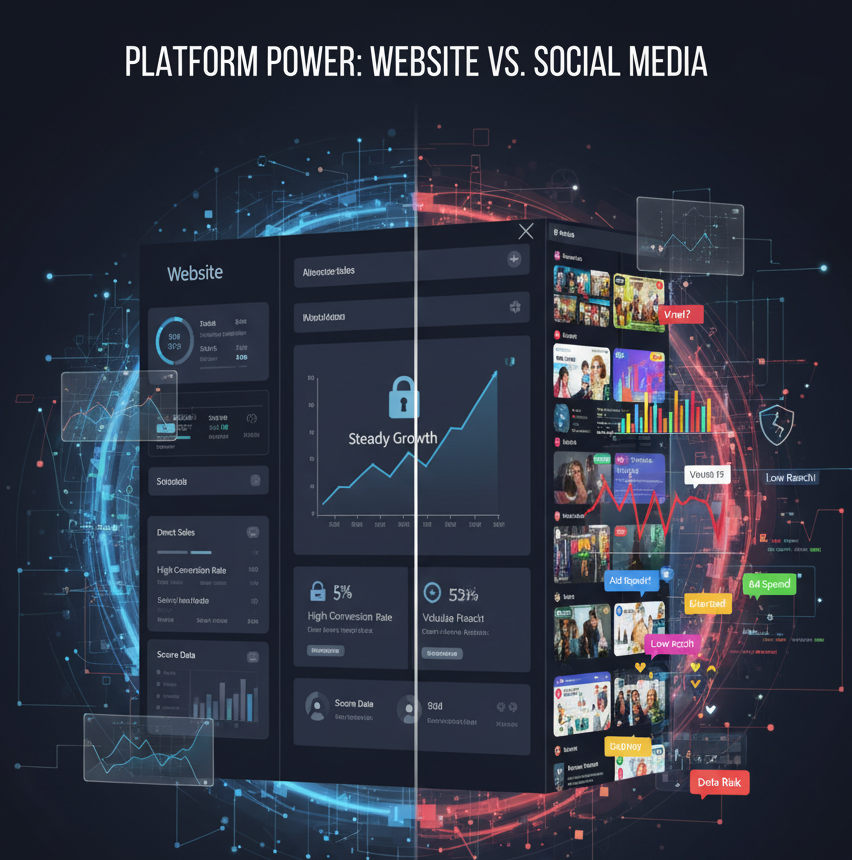
For many small and medium-sized businesses, social media feels like a magic shortcut. You post updates, share content, and suddenly it seems like customers are everywhere. But the truth is harsh: website vs social media for business is not even a fair comparison if your digital strategy depends entirely on platforms you don’t control.
In 2026, relying exclusively on social media is a high-risk strategy. Algorithms change unpredictably, platforms introduce new rules, and businesses that don’t own their digital real estate can quickly lose visibility. Website vs social media for business is more than a debate; it’s a critical strategic decision. A professional website acts as your digital headquarters, while social media is just a satellite channel.
1. Control and Ownership: Why Your Website Wins
When you consider website vs social media for business, ownership is the first major factor. On social media, your reach is dictated by algorithms and policy changes. One sudden update, and your carefully nurtured audience might shrink overnight. A website, however, gives you complete control over design, content, and customer interaction.
For example, you can integrate email newsletters, payment systems, and customer support directly into your site without relying on third-party rules. Social media cannot offer that level of control. According to Open Sky Agency, businesses that depend solely on social platforms often face sudden drops in engagement when algorithms shift, demonstrating the inherent instability of over-dependence.
2. Credibility and Trust: How a Website Builds Authority
Another aspect of website vs social media for business is credibility. Customers often perceive a professional website as more trustworthy than a business that only exists on social media. Social platforms are useful for engagement, but they are not synonymous with professionalism.
A well-designed website shows commitment, provides clear contact information, and allows clients to explore your services or products in detail. In contrast, a business that exists only on Facebook, Instagram, or TikTok can appear amateurish or transient. Digital marketing studies confirm that first impressions on websites are far more likely to convert casual visitors into paying customers than social media pages alone.
3. Long-Term Sustainability and Risk Mitigation
In 2026, thinking long-term is essential. Many businesses are blindsided by sudden platform bans, account suspensions, or shifts in engagement trends. Website vs social media for business clearly illustrates the danger: websites are durable, flexible, and under your control, while social media accounts are at the mercy of third-party rules.
Some businesses mistakenly believe that social media alone can generate a stable revenue stream. Yet the reality is stark: losing access to an account or experiencing a drop in algorithmic visibility can cause severe financial consequences. By establishing a website, businesses create a digital asset that continues to work for them, independent of social media fluctuations.
4. SEO and Discoverability: Why a Website is Non-Negotiable
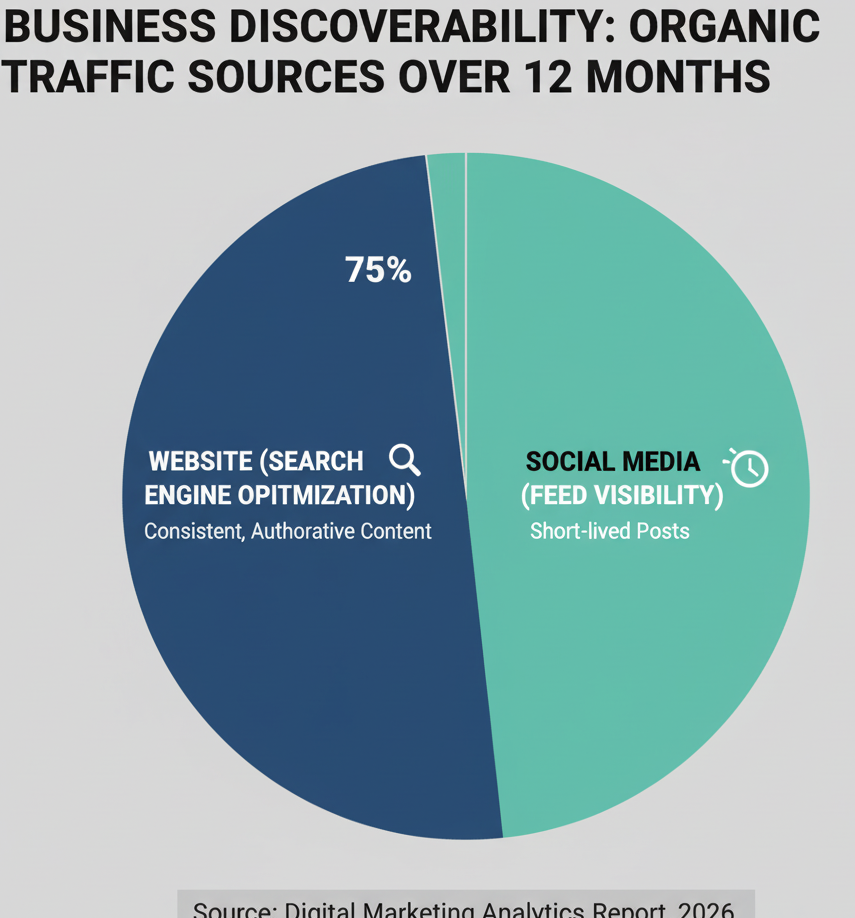
One of the most overlooked aspects of website vs social media for business is discoverability. Social media posts disappear into feeds quickly, limiting long-term visibility. Websites, on the other hand, can be optimized for search engines, ensuring your content remains accessible to new customers searching for your services.
Search engine optimization (SEO) allows businesses to rank for relevant keywords, appear in local searches, and attract organic traffic continuously. Integrating a blog, landing pages, and product descriptions creates a persistent online presence — something social media alone can’t achieve. For instance, Google favors websites with authoritative content and regular updates, which makes your business easier to find over time.
5. Customer Engagement: Quality Over Quantity
When weighing website vs social media for business, engagement is often misunderstood. Social media can generate likes, shares, and comments, but these interactions don’t always translate into meaningful business outcomes. A website allows for deeper engagement through tools such as live chat, downloadable resources, personalized offers, and membership or loyalty programs.
In 2026, businesses that rely solely on social media risk superficial engagement. Visitors may interact with posts, but there is no structured path guiding them to conversion. Websites provide that structure, giving users a seamless experience that encourages action, builds trust, and nurtures long-term relationships. Research from AryMedia reinforces that businesses with websites see higher retention and more meaningful engagement compared to those relying solely on social platforms.
6. Data Ownership and Analytics
Another critical consideration in website vs social media for business is data ownership. Social media platforms offer analytics, but the data is limited, aggregated, and ultimately controlled by the platform. With a website, you own every bit of information about your visitors, including traffic sources, behavior patterns, and conversions.
This enables precise marketing strategies and better decision-making. For example, tracking how users move through your website allows for optimizations that can increase sales or improve customer experience — a level of insight that social media alone cannot provide. In 2026, businesses that fail to capture and analyze their own data are effectively blind to opportunities for growth.
7. Resilience Against Platform Changes
Social media platforms are constantly evolving. Algorithm shifts, policy changes, and even temporary outages can dramatically affect visibility and engagement. In terms of website vs social media for business, this demonstrates a crucial risk: businesses without a website are at the mercy of third-party platforms.
Websites provide stability. Even if a social media account loses reach or gets suspended, the website remains a reliable hub for customers. Many businesses have learned this the hard way: relying entirely on social media can lead to sudden drops in leads, revenue, or customer trust. A website mitigates this risk by being a controlled, permanent space for your brand online.
8. Long-Term ROI and Strategic Growth
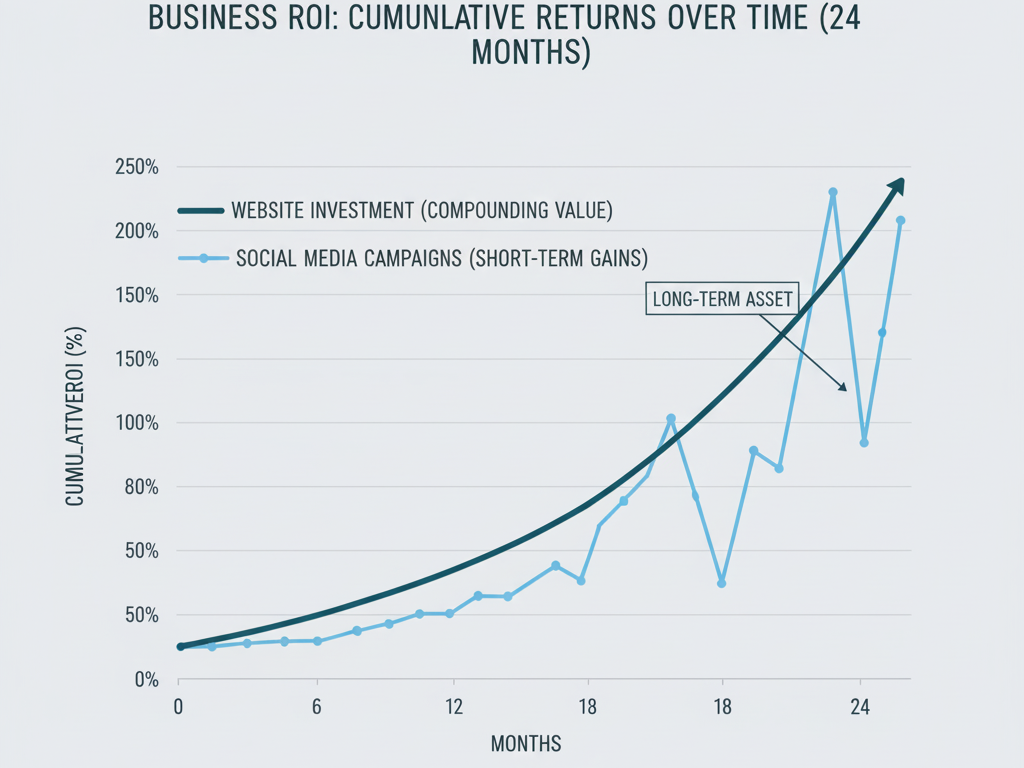
Finally, the most compelling argument in website vs social media for business is ROI. While social media can be effective for short-term campaigns and brand awareness, a website provides long-term value that compounds over time. Every blog post, landing page, or optimized product page continues to generate traffic and leads months and years after publishing.
Consider that businesses with robust websites benefit from organic search traffic, improved credibility, and opportunities for automated marketing campaigns. Social media alone cannot achieve the same persistent effect. For visual impact, a line chart comparing long-term ROI from website investment versus social media campaigns would work well here.
Don’t Gamble with Your Business’s Digital Presence
By now, it’s clear that website vs social media for business is not just a comparison; it’s a strategic decision that can determine your company’s survival and growth in 2026. Social media is powerful, but it should complement, not replace, a website.
Businesses that combine a professional website with social media channels enjoy the best of both worlds: controlled ownership, sustainable traffic, credibility, and measurable engagement. Meanwhile, those relying solely on social media risk algorithm changes, limited analytics, and a lack of long-term ROI.
The choice is simple: secure your brand’s future by owning your digital presence first, then leverage social media to amplify it. In 2026, businesses that fail to prioritize this balance will be left behind.