
Artificial intelligence has reached a turning point, and AI trends 2026 are shaping everything from business operations to how everyday people interact with technology. For both developers and non-technical entrepreneurs, AI trends 2026 represent a shift from using AI as a tool… to using AI as an intelligent collaborator that plans, builds, decides, analyzes, and automates.
Businesses that understand these AI trends 2026 early will innovate faster and operate more efficiently than their competitors. Developers who adapt will build solutions that feel futuristic, automated, and deeply personalized. And consumers will experience technologies that feel more intuitive than ever before.
Below is the first section explaining the first three key pillars driving this revolution.
1. AI trends 2026 and the Rise of Autonomous AI Agents
One of the most defining AI trends 2026 is the explosion of AI agents — autonomous systems that perform multi-step tasks without constant human supervision.
These agents can:
- plan and execute tasks
- retrieve information
- build workflows
- take actions online
- interact with other agents
- manage business processes end-to-end
This is not sci-fi anymore. According to a recent research paper on the Agentic Web (arXiv), autonomous agents will soon coordinate across platforms to complete complex tasks without human involvement:
https://arxiv.org/abs/2507.21206
For example:
- A travel agent AI books your flight, negotiates prices, checks visa requirements, and organizes your itinerary.
- A business agent AI analyzes monthly sales, drafts reports, sends reminders, and schedules meetings.
- A developer agent AI creates code scaffolding, writes tests, and deploys apps.
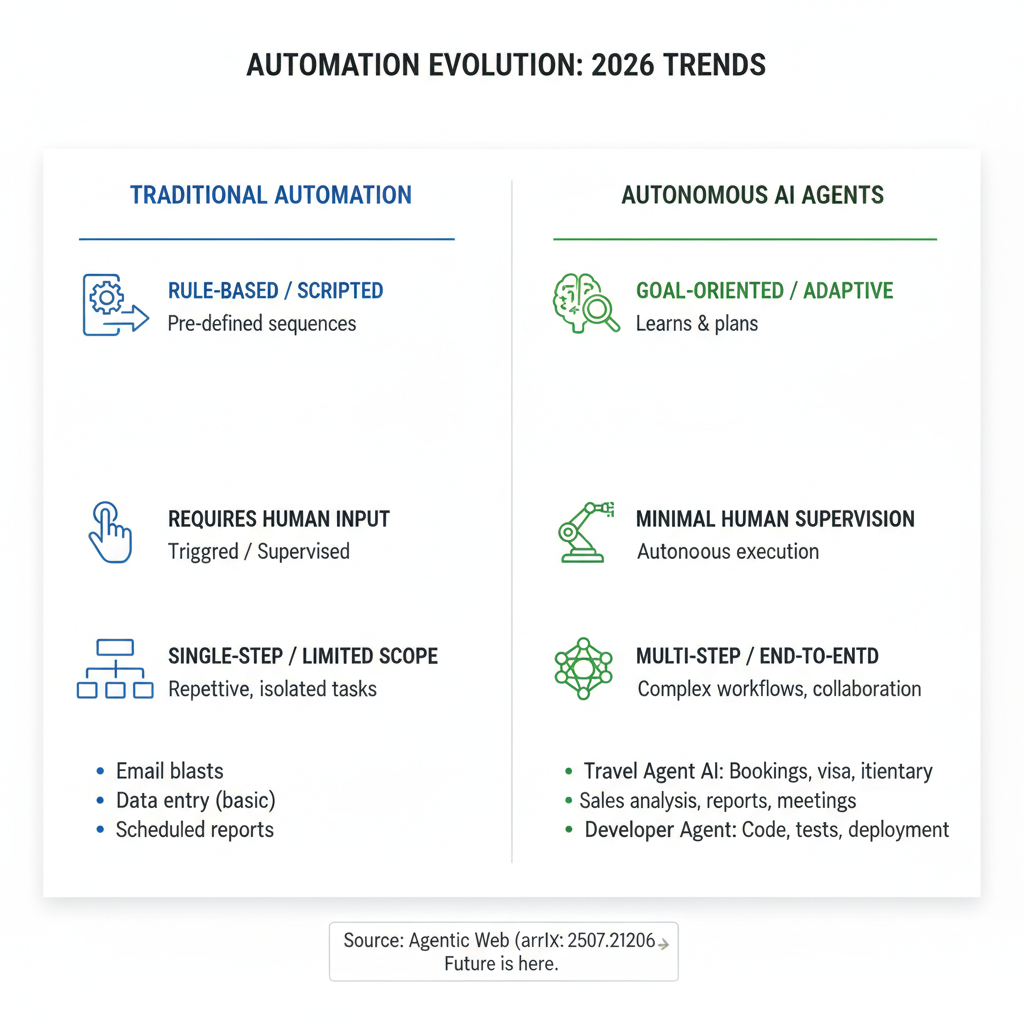
These AI trends 2026 will reshape how companies operate, enabling leaner teams with far greater output.
2. AI trends 2026 in Predictive Analytics & Decision Intelligence
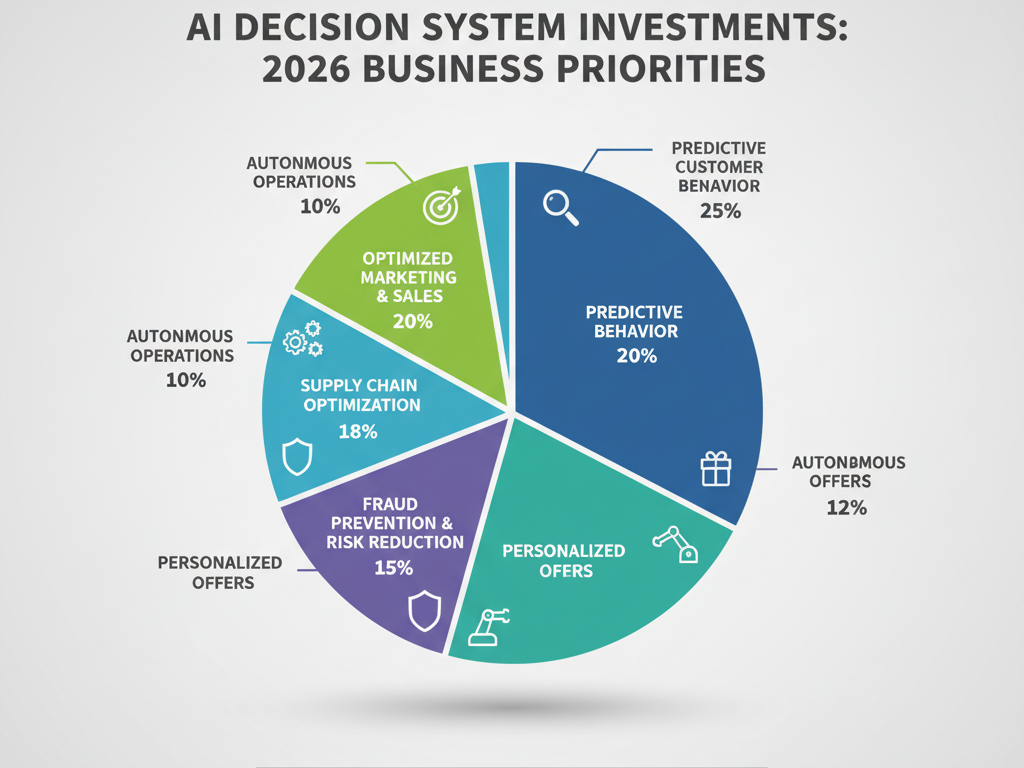
Another major AI trends 2026 shift is how organizations are moving from data dashboards to data prediction and automated decisions.
Decision intelligence combines:
- forecasting models
- reinforcement learning
- real-time analytics
- autonomous decision systems
Businesses are adopting platforms that not only analyze data but also recommend actions and execute them.
A report from McKinsey on digital transformation highlights that AI-based decision systems will become the backbone of business strategy by 2026:
https://www.mckinsey.com/capabilities/mckinsey-digital/our-insights
To make this understandable for non-technical readers:
Instead of manually checking analytics and guessing what to do, AI trends 2026 enable systems that watch your business data automatically and make smart suggestions — or even take action.
These advancements help businesses:
- reduce risks
- predict customer behavior
- optimize marketing
- prevent fraud
- personalize offers
- improve supply chain efficiency
3. AI trends 2026 Driving Hyper-Personalized Experiences
Possibly the most visible AI trends 2026 impact is hyper-personalization. Every digital platform — from websites to mobile apps — is shifting to experiences that adapt in real time.
This includes:
- personalized website content
- tailored product recommendations
- dynamic pricing
- AI-driven customer support
- adaptive learning systems
- voice and vision personalization
A credible overview of personalization models and user behavior insights can be found on MDN Web Docs:
https://developer.mozilla.org
To make this simple:
Instead of showing every user the same content, AI trends 2026 enable platforms to show each person exactly what fits their goals, behavior, and preferences.
Businesses gain higher engagement.
Users feel more understood.
Developers offer smarter digital experiences.
Hyper-personalization is becoming the new standard — not an optional feature.
4. AI trends 2026 in Real-Time Cybersecurity & Threat Response
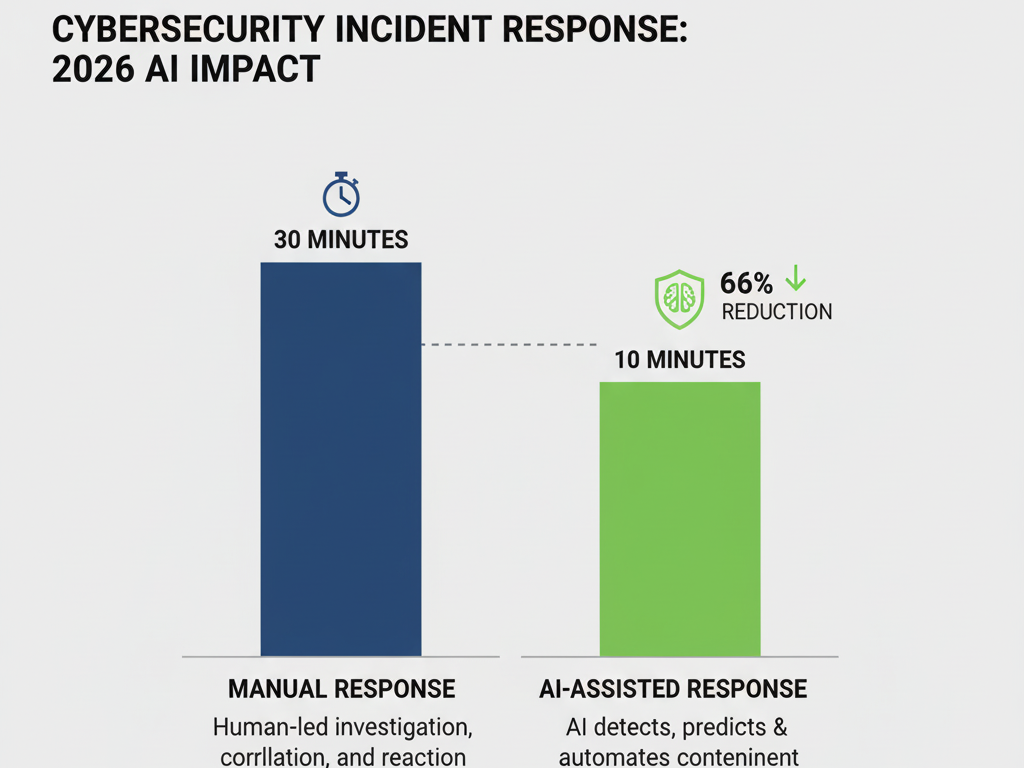
Cybersecurity has always been a race between attackers and defenders, but AI trends 2026 are finally tipping the balance. Modern security systems are no longer waiting for attacks to happen before reacting. Instead, they constantly analyze patterns in real time, predict suspicious behavior, and stop threats before they cause damage.
For non-technical readers, think of it this way: instead of installing security cameras and checking footage after a break-in, AI trends 2026 give businesses a system that identifies a potential intruder as they walk toward the door and locks everything down instantly.
A recent report from IBM Security explains that AI-powered threat detection tools reduce incident response time by more than half, which proves exactly why AI trends 2026 are transforming how organizations protect their data online. This would be a good place to add a simple visualization comparing manual vs AI-assisted response time.
5. AI trends 2026 and the Evolution of Voice, Vision, and Multimodal Interfaces
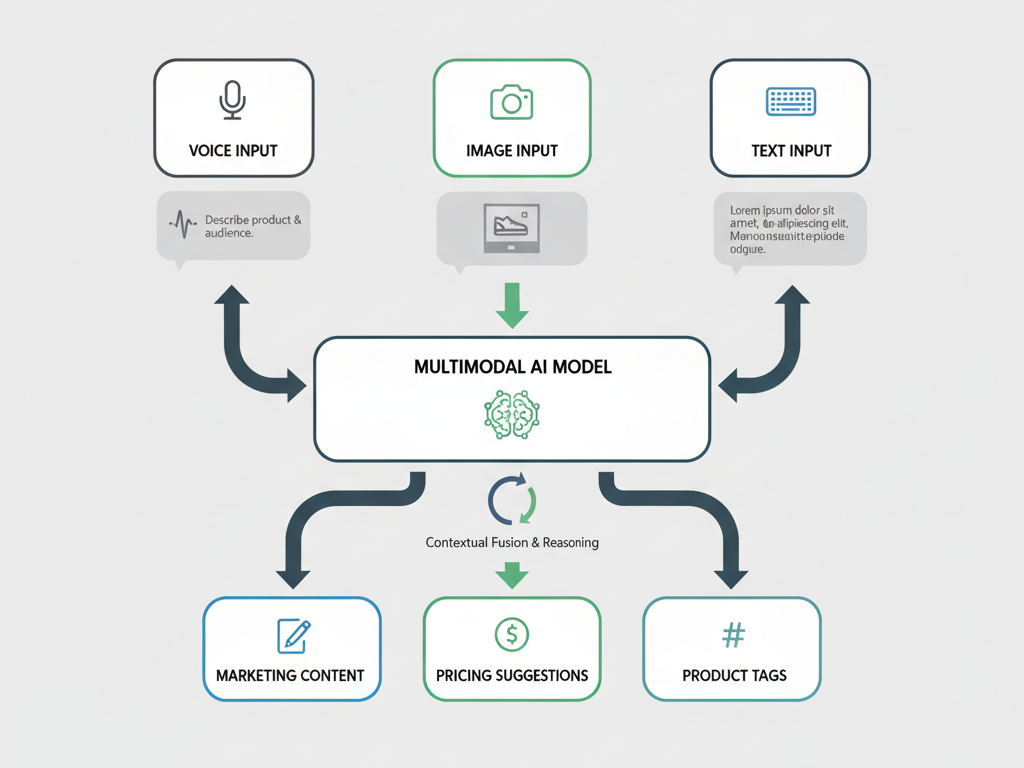
Interfaces are no longer limited to typing or tapping. One of the most exciting directions in AI trends 2026 is the rise of multimodal technology, where systems understand voice, images, gestures, video, and text at the same time. You can talk to an app, show it an image, or describe a task — and it understands everything in context.
This shift is making technology dramatically more natural for everyday users. A shop owner without technical skills can take a photo of their product, describe the target audience verbally, and let an AI generate marketing content, pricing suggestions, and product tags. Multimodal models highlighted by Google DeepMind show how rapidly these systems are advancing, placing multimodal AI at the center of AI trends 2026.
For a visual illustration of this concept, you can show how different input types (voice, image, text) merge into a single AI understanding.
6. AI trends 2026 Powering the Automation of Entire Digital Ecosystems
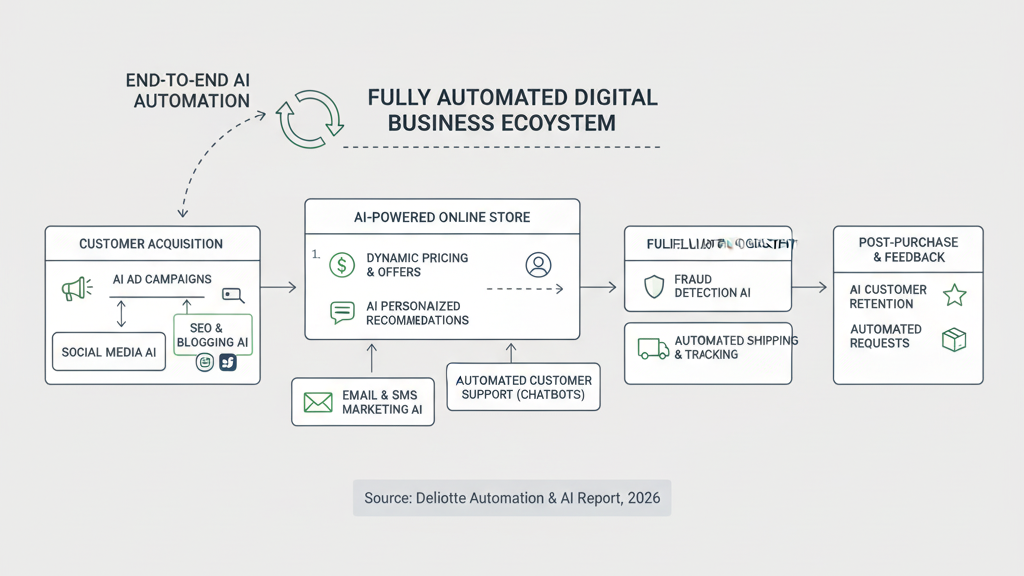
Another significant movement in AI trends 2026 is the shift toward fully automated digital ecosystems. Businesses are no longer automating single tasks; they are automating entire operations. An online store, for example, can now integrate AI that updates inventory, analyzes customer behavior, writes ad copy, adjusts pricing, sends email campaigns, and optimizes product descriptions — all running continuously without human intervention.
This is the level of automation that used to require a team of specialists, but AI trends 2026 make it accessible to startups, freelancers, and small businesses with limited resources. According to Deloitte’s insights on automation and AI, companies adopting full-flow AI automation see faster scalability and reduced operational costs, which is further proof that AI trends 2026 are reshaping modern business structures.
To help readers visualize this ecosystem, a diagram showing an automated workflow from marketing to fulfillment would work perfectly.
Why Understanding AI trends 2026 Gives You a Competitive Edge
The impact of AI trends 2026 goes beyond technical innovation. They represent a transformation in how society works, how businesses operate, and how individuals use technology daily. Whether it’s autonomous agents, predictive intelligence, cybersecurity, personalization, multimodal interfaces, or fully automated ecosystems, AI trends 2026 prove that AI is no longer a futuristic concept — it is the new foundation of modern technology.
Businesses that adapt to these changes will grow faster, make better decisions, and reach new levels of efficiency. Developers and creators who embrace AI trends 2026 will design tools and experiences that feel smarter, more responsive, and more human than ever before. And everyday users will interact with technology in ways that feel effortless, intuitive, and deeply personalized.
Nice 👍👍👍
Thanks for this informative blog
You're welcome bro